Good
Very strong value theater. 7.2.4 or lean 9.2.4, projector around $5K-$7K, solid AT screen, in-wall speakers, dual real subs, simple control.
$60K-$85K all-in planning rangehighest value
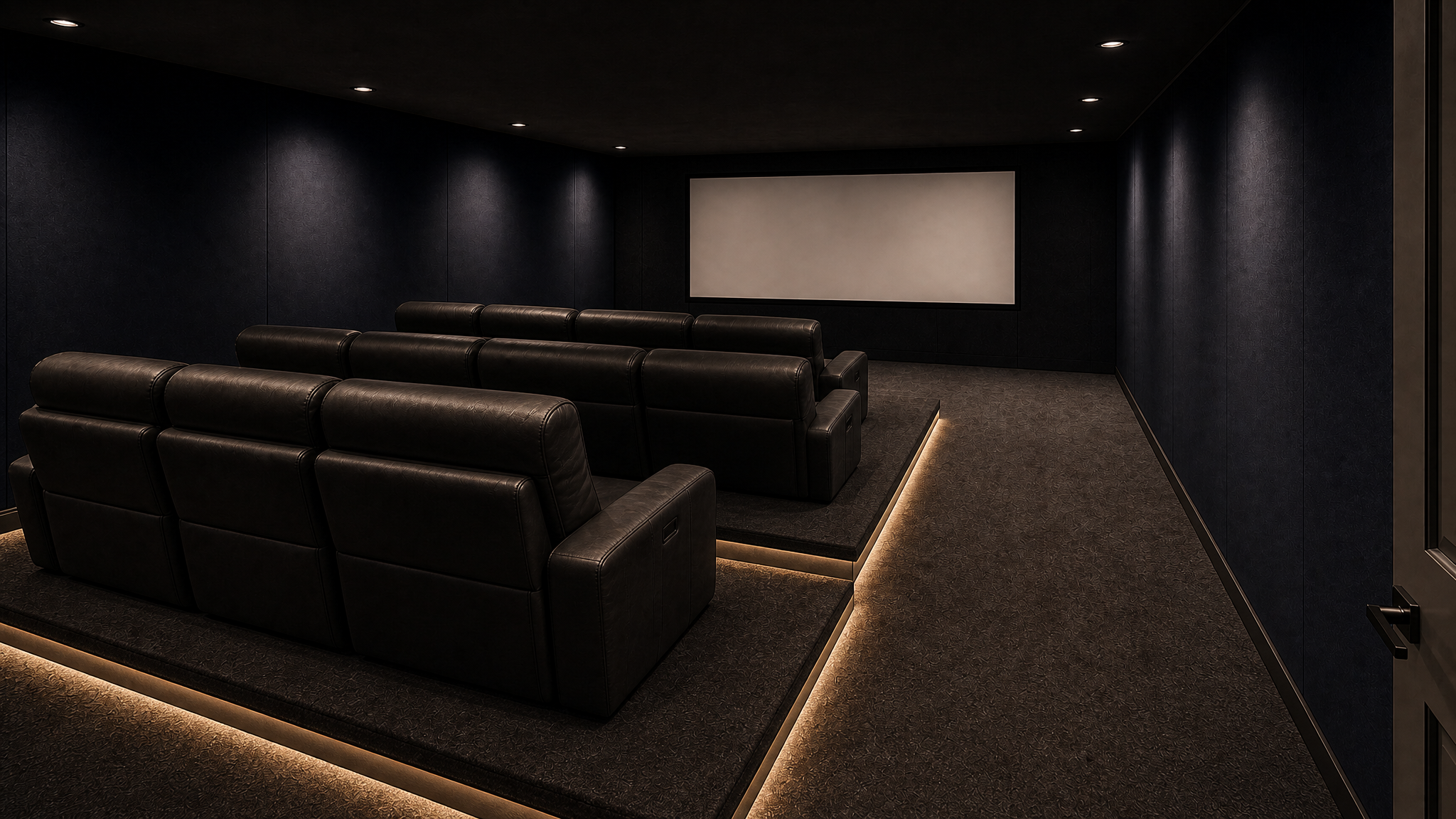
27' x 20' dedicated basement theater
Recommended direction: short-wall acoustically transparent screen, three rows shifted back, two stepped riser levels, hidden front stage, hidden subs, plain black ceiling, and enough conduit/wiring to avoid ripping walls open later.
Recommendation
The Best tier has real performance upside, but the first dollars should go into geometry, acoustic treatment, bass management, rack/cooling, prewire, and calibration. For this room, those choices will matter more than chasing a $25K projector or luxury ceiling effect.
Very strong value theater. 7.2.4 or lean 9.2.4, projector around $5K-$7K, solid AT screen, in-wall speakers, dual real subs, simple control.
The recommended target. 9.2.4, better processor/amp path, installer-grade AT screen, Triad/KEF-grade speakers, dual calibrated subs, lighting scenes, proper rack.
Reference-grade feel. Premium projector, masking or premium screen, processor plus separate amps, higher-end architectural speakers, four-sub wiring, advanced treatment.
Room geometry
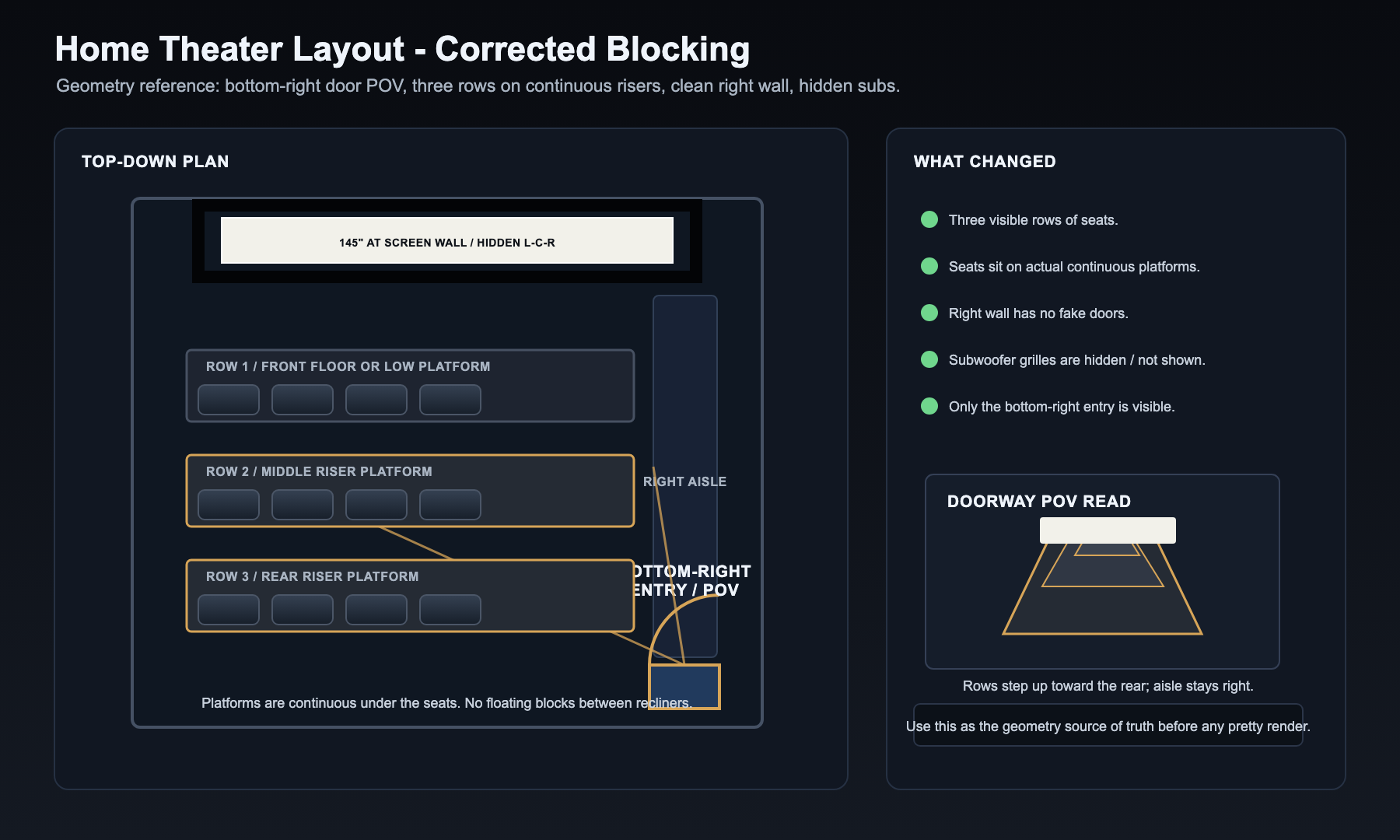
145" is the cinematic target; 133" is the fallback if the sightline drawing pushes the image too high.
Three rows should stay 4 seats wide until the installer proves 5-6 across works with aisle and recliner width.
Start the drawing at roughly 8"-10" middle riser and 16"-18" rear riser; final height is sightline math.
Use a false wall / fabric wall behind the AT screen. No visible LCR speakers and no visible sub grilles.
Sightline gate
The page can recommend targets, but the final row spacing and platform heights should not be guessed. The bid should include the actual section drawing with the selected recliner model.
AV stack
The recommended bid target is the Better column. Good is the value floor I would accept. Best is where the money starts becoming taste and bragging rights.
| Category | Recommended item | Why | Budget | Link |
|---|
Budget control
The $50K equipment anchor is plausible, but it is not the project budget. Riser construction, sound isolation, seating, HVAC/noise, lighting, electrical, rack cooling, and acoustic treatment can become the second half of the project.
Require the quote to split equipment, construction/buildout, electrical, rack/network, programming, calibration, seating, acoustic treatment, service plan, and customer-supplied-equipment assumptions.
If the quote is one package number, it is not decision-grade.
Wow features
Skip the star ceiling for now. The best value wow is lighting, tactile bass, clean concealment, and a front wall that looks like a real cinema.
False wall with AT screen, black fabric, hidden LCR, hidden subs, and soft indirect wash. It is the highest-impact visual move and helps hide equipment.
high valueWarm LED under riser lips, step nosing, and scene presets. It makes the riser design feel intentional and helps safety.
high valueButtKicker/Crowson-style seat shakers add impact without making the whole house shake. Great value if bass isolation is a concern.
optionalUse framed acoustic art panels or poster lightboxes only if they double as treatment or keep the walls clean.
taste dependentNice if you watch a lot of scope content, but usually a Best-tier feature after screen, sightlines, subs, and calibration are locked.
expensiveExcellent luxury source quality. Bad first-dollar value unless the rest of the theater is already dialed.
best tier onlyFuture proofing
Conduit, spare wire, service loops, and access panels are boring. They are also the difference between an easy upgrade and tearing into finished walls.
Home Theater Gurus-informed checklist
The useful thread from Home Theater Gurus and the broader enthusiast consensus is not "buy this shiny thing." It is angles, sightlines, REW measurements, multi-sub integration, and avoiding Atmos placement mistakes.
Speaker locations should be based on main listening positions and Dolby angle windows, then checked against all three rows. Pretty symmetry can still be wrong.
Hidden/ducted subs are fine only if TriZone explains enclosure type, path, vibration isolation, ventilation, service access, and measurement/tuning plan.
Ask for REW/measurement screenshots, crossover settings, delays, levels, target curve, and before/after sub response. "We calibrated it" is not enough.
Installer ask
This is the concrete ask that turns the concept into something bid-ready.
Please send a written concept package for the 27' x 20' room with:
Sources and product links
Prices move. Treat dollar ranges as planning-level until the vendor quote lists exact model numbers and authorized-dealer pricing.